Start a Project

How to Measure Windows for Blinds

Inside fit or outside fit?

Inside (recess) fitOutside (face) fit
LooksNeat, shows the frameCovers the frame, blocks more light
NeedsEnough recess depth for the bracket and the blindFlat wall or architrave above the window
Width you recordSmallest of three widths, exactOpening width plus overlap each side
Drop you recordLargest of three dropsOpening drop plus overlap above and below
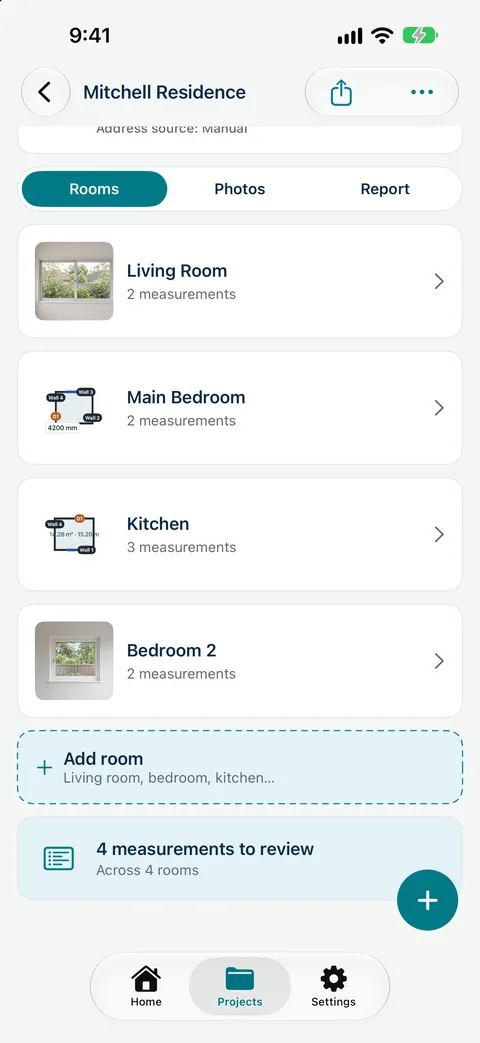
Measure Genie project overview for the Mitchell Residence sample with Living Room, Main Bedroom, Kitchen and Bedroom 2

Tools

Steel tape (not a cloth tape), pencil, a way to record sizes against each window, and a phone for photos.

Measure an inside fit

  1. Measure the width inside the recess at the top, middle and bottom. Record the smallest.
  2. Measure the drop at the left, centre and right. Record the largest.
  3. Measure the recess depth and note anything in the way: winders, handles, tiles, sensors.
  4. Write the size as width x drop in millimetres, for example 1820 x 1450.
  5. Label the window (for example "Window 1" in Bedroom 2) and photograph it.
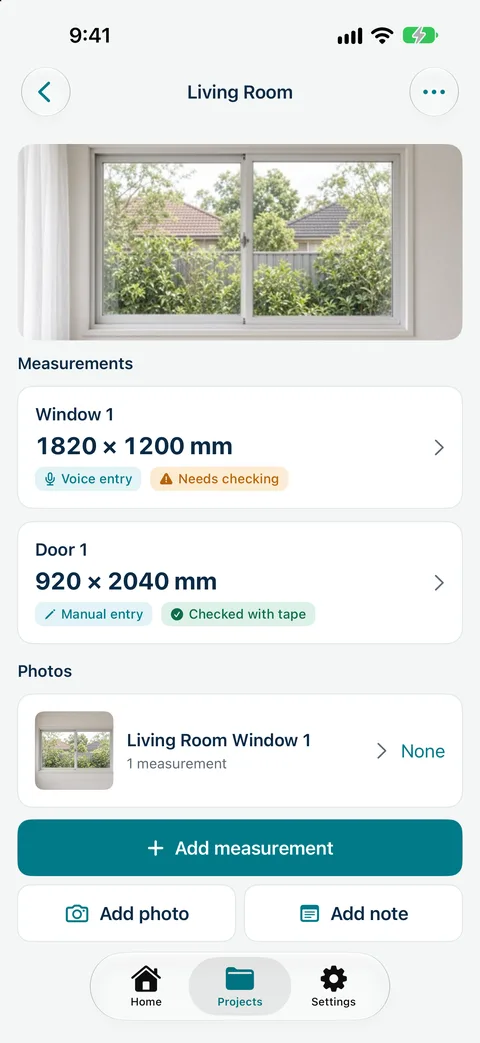
Measure Genie Living Room list with Window 1 from voice entry marked needs checking and Door 1 checked with tape

Measure an outside fit

  1. Measure the opening width and add your overlap each side (commonly 50 to 100 mm, follow your supplier's guide).
  2. Measure from where the bracket will sit to where the blind should finish.
  3. Check there is a flat fixing surface and clearance for handles.

Bay and corner windows

Measure each pane as its own window, note the angle between them, and decide who gets the corner gap. A photo with each section labelled saves a return trip.

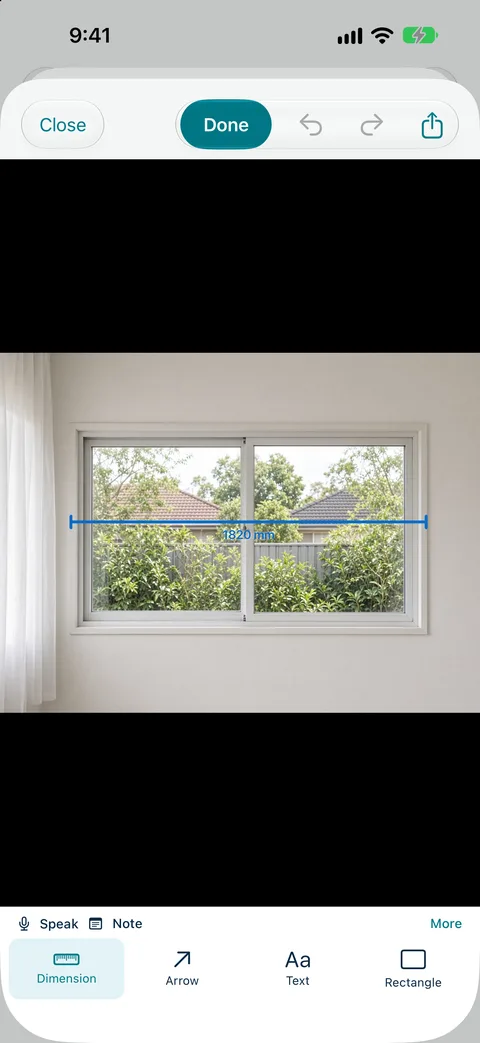
Measure Genie photo markup with a dimension line drawn across a window

Record sizes by voice, mark up photos and send a branded measure report from site. Measure Genie is coming soon to iPhone and Android. Register your interest

Common mistakes

  • Mixing width and drop. Always write width first.
  • Measuring once. Recesses are rarely square, which is why you take three readings.
  • Deducting for the fit yourself when the supplier also deducts. Record the true size and the fit type, and let the order form handle deductions.
  • Relying on a phone estimate for the order. Phone AR sizes are estimates, so confirm with a tape before you order.

How Measure Genie helps on site

  • Open the room you are measuring, tap the mic and say "Window one, 1820 by 1450". A confirm card appears before the size is saved as Window 1.
  • Mark up the window photo with dimension lines, arrows and notes.
  • Each size shows its source (typed, voice, AR or LiDAR) and whether it has been checked. Mark the sizes you order from "Checked with tape"; anything unchecked shows "est." in the PDF report.
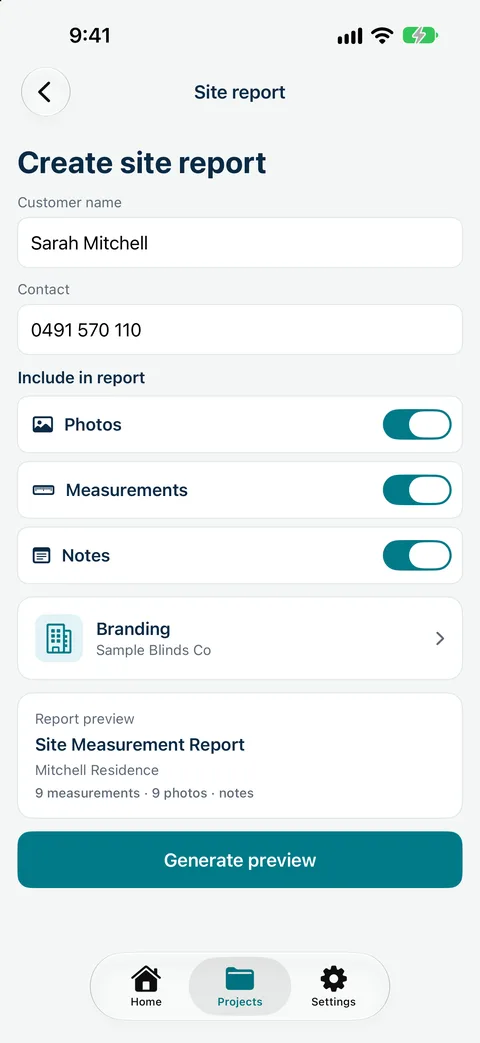
  • Share a branded PDF measure report with the customer or your workroom from site.
Measure Genie Create site report screen with customer details, include toggles and branding

Be first to measure with Measure Genie

Measure Genie is coming soon to iPhone and Android. Register your interest and we will let you know when it is ready to try.

One measuring app for every trade.

Register your interest

Frequently asked
questions

Should I measure in millimetres or centimetres?

Millimetres. Most Australian blind suppliers order in millimetres and it avoids decimal mistakes.

Do I take the smallest or largest width?

For an inside fit, the smallest width and the largest drop.

Can I measure windows for blinds with my phone?

A phone AR measure gives a quick estimate that is handy for a first look. Confirm sizes with a tape before ordering made-to-measure blinds.

How do I measure a bay window for blinds?

Treat each pane as a separate window, record the angles and photograph the whole bay with labels.

Who should measure, me or the installer?

For made-to-measure blinds many suppliers recommend a professional measure, since the installer is responsible for the fit.